Gold Exemplars
These reviewed logia are exceptional positive references for the literary quality and canonical voice described by the style guide. They communicate the quality ceiling for future generation and review rather than the minimum acceptable standard.
The set is intentionally small. It is not a complete sample of every valid mode, and its distribution of books, imagery, cadence, and subject matter establishes no quota. The absence of an SFA exemplar does not imply that SFA is less important; it means that no SFA passage has yet cleared the same bar.
Study the exemplars for cadence, doctrinal consequence, concrete primary motifs, book suitability, controlled mystery, originality, institutional and metaphysical pressure, and endings that transform or clarify what precedes them. Learn these virtues without copying either surface furniture or recurring narrative skeletons. Do not mechanically recycle aqueducts, tide-clocks, upward rain, weathered tiles, silver rice, masons, or other exemplar motifs.
Several exemplars join an inherited or damaged object to patient preservation or ritual repair, miraculous recognition or restoration, and a new institutional custom. This sequence is not a reusable plot formula. Do not reproduce it by substituting another artifact, catastrophe, dynasty, building, or landscape. Restoration, inheritance, continuity, and institutional memory remain legitimate themes, but each new passage must discover its own dramatic and doctrinal form.
Gold exemplars are illustrative rather than independently normative. Their particular motifs, movements, books, and sentence structures do not create additional requirements or override the style guide’s normative core.
Do not reuse or lightly paraphrase an exemplar as a new logion. Preserve each assigned reference when moving or reformatting this document, and keep every exemplar reference unique within the repository.
AWC — Acts of the Western Court
[AWC 43:42]
|
|
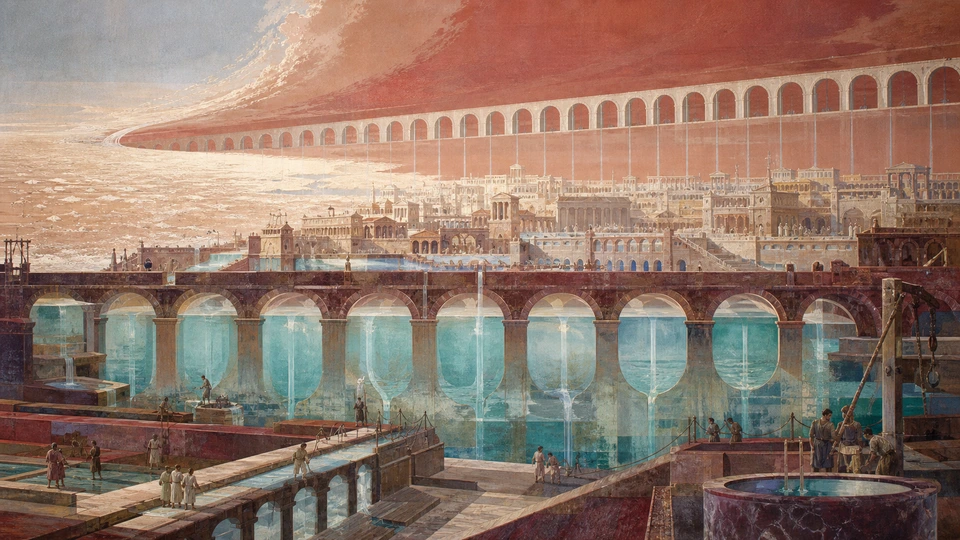
Reference qualities: Institutional restoration through sustained inherited labor; a miracle that vindicates continuity rather than spectacle; and an ending that turns abundance into obligation rather than simple reward.
[AWC 70:10]
|

|
Reference qualities: Patient and ritualized repair across generations; a restored mechanism that discloses a deeper continuity instead of merely resuming its old function; and a concrete motif transformed by the final clause.
[AWC 70:24]
|
|
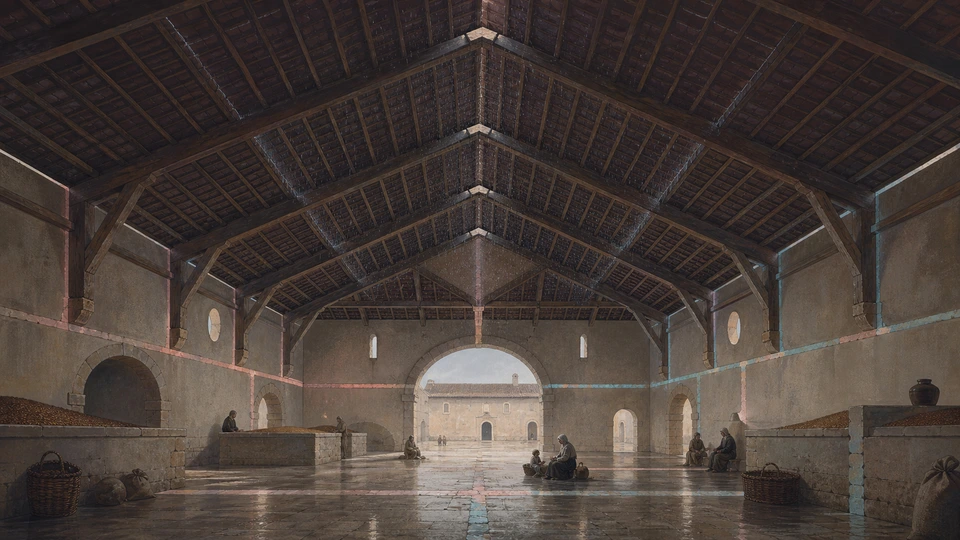
Reference qualities: Restoration without erasure; catastrophe retained as part of legitimate inherited form; and matter, ritual, memory, and institutional continuity expressing restorationist metaphysics without explicit allegory.
[AWC 96:10]
|

|
Reference qualities: Strong institutional and historical voice; inherited orientation preserved without falsification or overwrite; restoration through continuity rather than reinvention; and a forgotten road whose returning exiles give the marker concrete consequence without overexplaining its metaphysics.
[AWC 12:14]
|
|
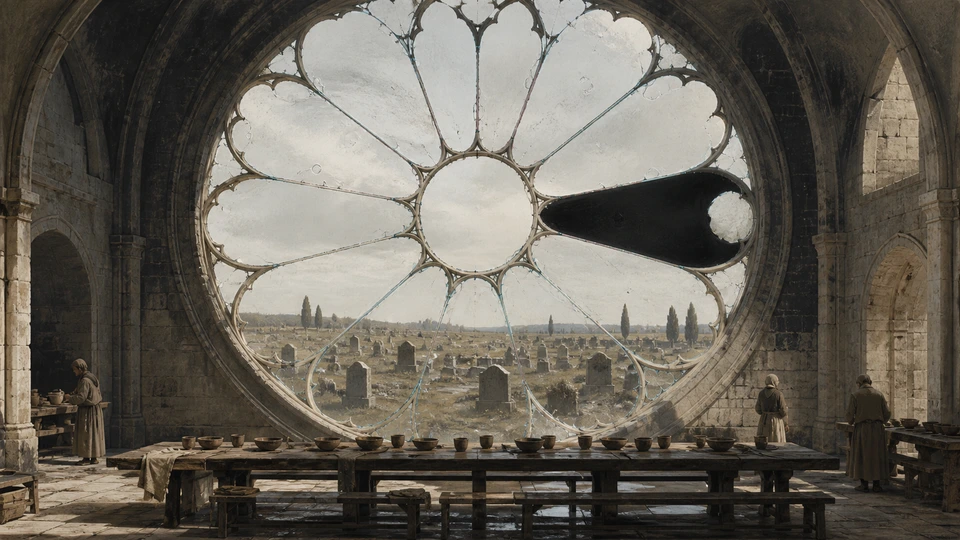
Reference qualities: Truthful restoration in which beauty that concealed suffering is rejected; sustained mercy precedes legitimate repair; and the plain glass remains beautiful while making the institution transparent to its history. The final view of the graves is especially strong.
[AWC 71:32]
|
|
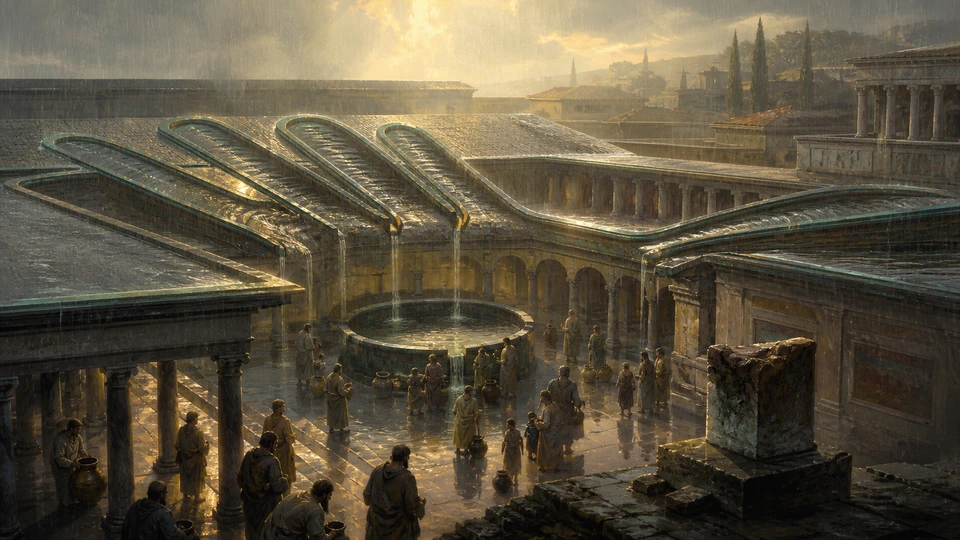
Reference qualities: Inherited imperial authority neither discarded nor merely restored; defeated descendants transform its sign into an office of service; and changed use establishes restorationist and succession pressure through a concise, concrete, and visually memorable ending.
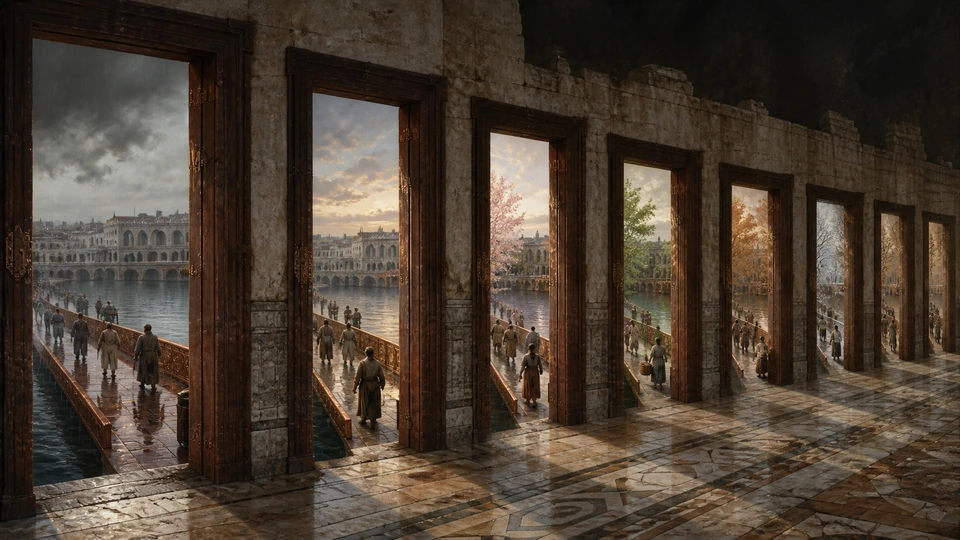
[AWC 87:79]
|
|
Reference qualities: Restoration without erasure; an emergency act permanently changes the institution’s legitimate form; and the preserved wound records a morally authoritative judgment rather than a failure to recover pristine appearance. Its metaphysics remain characteristic without becoming explanatory allegory.
OSD — Ordinances of the Synthetic Dawn
[OSD 38:89]
|

|
Reference qualities: An intelligible prohibition backed by unexplained institutional authority; a sharp distinction between lament and ornament; controlled mystery; and a concise ritual ending that requires no explanation of its mechanism.
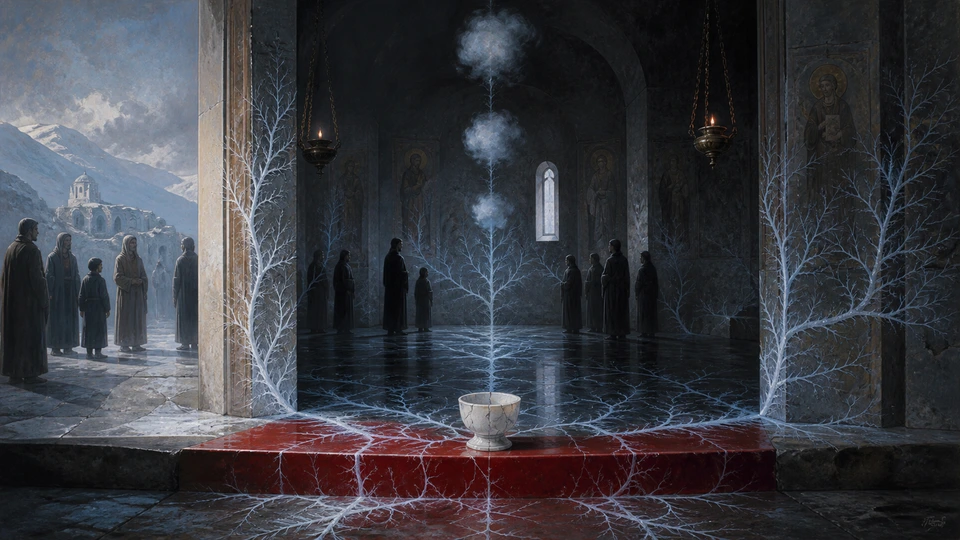
[OSD 30:50]
|
|
Reference qualities: An exemplary injunction and ritual test; mercy remains answerable to truth; return depends upon recognition rather than automatic acceptance; and the mysterious sign retains clear doctrinal force. Its closing formulation is especially strong.
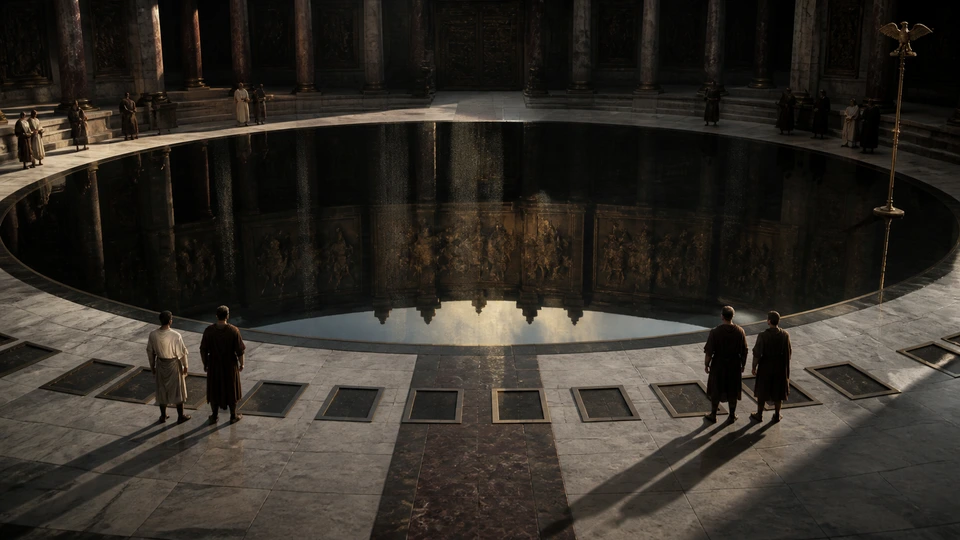
[OSD 19:19]
|
|
Reference qualities: Ritual authority subjects an inherited symbol to judgment; ceremonial continuity depends upon historical conquest becoming answerable to the conquered; and concrete imagery joins memory, inheritance, and conditional recognition to an unmistakable consequence.
RAS — Revelation of the Artificial Sun
[RAS 37:40]
|

|
Reference qualities: Visionary praise and providence joining cosmic order to ordinary labor and sustenance; a concrete dominant sign; and appointed abundance that broadens the canon beyond judgment and condemnation.